Radio Frequency (RF) emissions refer to the electromagnetic energy released by electronic devices during operation. These emissions occur naturally as electrical signals switch and flow through circuits, cables, and components. While many RF emissions are intentional (such as Wi-Fi, Bluetooth, and radio broadcasting), unintended emissions can also occur and may cause interference with nearby electronic systems. Managing RF emissions is essential to ensure that electronic equipment operates reliably and safely within its intended environment.
RF interference (RFI) happens when unwanted RF energy disrupts the normal functioning of electronic devices. This interference can degrade signal quality, cause data loss, introduce noise, or lead to complete system malfunction. Common sources of RF interference include power supplies, motors, switching circuits, wireless transmitters, and poorly shielded cables. The severity of interference depends on factors such as signal strength, frequency, distance, and environmental conditions.
To reduce RF emissions and prevent interference, designers use techniques such as electromagnetic shielding, grounding, filtering, proper cable management, and careful circuit layout. Compliance with electromagnetic compatibility (EMC) standards ensures that devices emit RF energy within safe limits and remain resistant to external interference. Effective control of RF emissions and interference is crucial in industries such as telecommunications, medical devices, automotive systems, and aerospace, where reliability and performance are critical.
Emissions Classifications
Emissions classifications are used to categorize the types and levels of electromagnetic emissions produced by electronic devices, ensuring compliance with electromagnetic compatibility (EMC) regulations. These classifications define acceptable emission limits to prevent devices from causing harmful interference to other equipment operating in the same environment. Standards organizations such as CISPR, IEC, FCC, and ETSI establish emission classes based on factors including frequency range, measurement method, and intended operating environment.
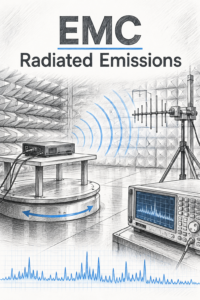
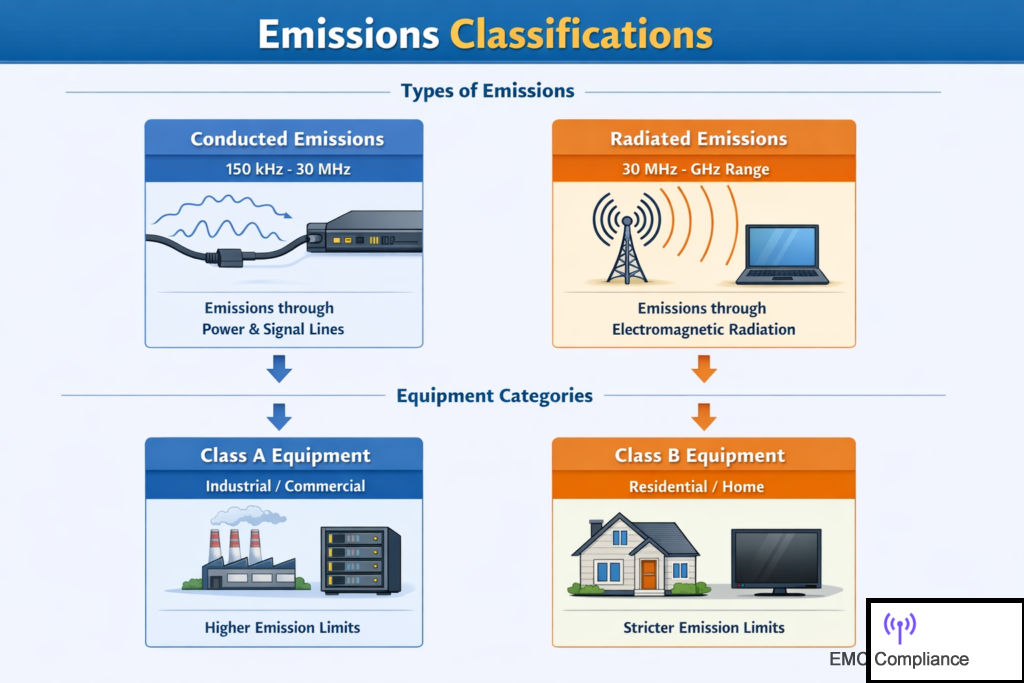
Electromagnetic emissions are broadly classified into conducted emissions and radiated emissions. Conducted emissions travel along power lines and signal cables, typically in the frequency range of 150 kHz to 30 MHz, and can interfere with other equipment connected to the same electrical network. Radiated emissions, on the other hand, propagate through free space as electromagnetic waves, usually between 30 MHz and several GHz, potentially affecting nearby wireless systems, communication equipment, and sensitive electronics.
Devices are further classified according to their operating environment, most commonly as Class A or Class B equipment. Class A devices are intended for industrial or commercial environments, where higher emission levels are acceptable due to controlled conditions and professional operation. Class B devices are designed for residential environments and must meet stricter emission limits to protect household electronics and communication systems. These classifications ensure that electronic products function reliably without causing unacceptable electromagnetic interference in their intended settings.
Emissions Broke down:
- Radiated RF
- Conducted RF, Supply Port
- Conducted RF, Other Ports
- Click/Transients (Domestic Appliances)
Detector Types and Bandwidths
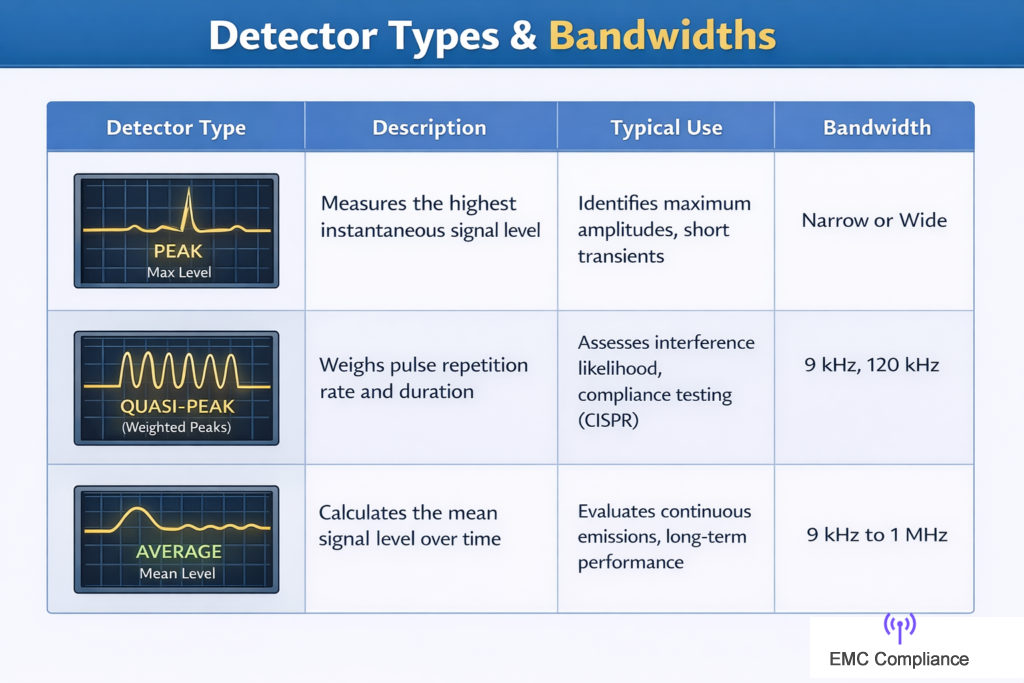
Detector types in RF and EMC measurements are critical for accurately capturing and interpreting electromagnetic emissions from electronic devices. Different detectors are optimized for varying signal characteristics and measurement goals. The most common types include peak detectors, quasi-peak detectors, and average detectors. A peak detector captures the highest instantaneous signal level, which is useful for identifying maximum emissions but can overstate the impact of short, transient spikes. Quasi-peak detectors weigh pulse repetition and duration, making them ideal for compliance testing under standards like CISPR, as they reflect the likelihood of human-perceived interference. Average detectors compute the mean signal level over time, providing a better representation of continuous emissions, which is important for assessing long-term system performance.
Bandwidth refers to the frequency range over which a measurement instrument captures or filters signals. It directly affects the accuracy and relevance of emission measurements. A narrow bandwidth improves frequency resolution, allowing precise identification of specific emission peaks, but may miss wider signals or rapid transients. A wide bandwidth captures more of the signal’s spectrum, which is useful for assessing total emitted energy, but can obscure fine spectral details. Regulatory standards specify detector bandwidths to ensure consistent and comparable measurements across different devices and laboratories.
Combining detector types with appropriate bandwidths allows engineers and compliance testers to accurately evaluate electromagnetic emissions and ensure devices meet regulatory limits. For example, a quasi-peak detector with a 9 kHz resolution bandwidth is typically used for conducted emissions measurements, while radiated emissions may require broader bandwidths with peak and average detection modes. Understanding the relationship between detector type and bandwidth is crucial in EMC testing, helping designers mitigate interference risks and achieve regulatory compliance efficiently.