1. Fundamental Scope and Regulatory Role
| Aspect | EN 55032:2015+A1:2020 | ETSI EN 301 489-1 V2.2.3 |
| Primary purpose | Emission limits only (radiated & conducted) | Full EMC (emissions + immunity) |
| Regulatory use | EMC Directive (2014/30/EU) OR referenced under RED | Harmonised under RED 2014/53/EU |
| Product scope | Multimedia equipment (MME) | Radio equipment + ancillary equipment |
| Role | Standalone test standard | Framework standard + requires product-specific parts (e.g. 301 489-17) |
2. Emissions Coverage
| EN 55032:2015+A1:2020 | ETSI EN 301 489-1 V2.2.3 | |
| Frequency Range | Conducted Emissions .15-30MHz Radiated Emissions 30-6GHz | Refer to EN55032 for emissions. |
| Limits | Class A/B | Does not define emissions limit, refer to EN55032 |
2.1 Conducted Emissions
When you look specifically at conducted emissions, there is actually very little technical difference between EN 55032:2015+A1:2020 and ETSI EN 301 489-1 V2.2.3 (2019-11)—but the reason why is important.
EN 55032 is the source standard that fully defines conducted emissions requirements. It specifies the frequency range (typically 150 kHz to 30 MHz), measurement methods, detector types (quasi-peak and average), limits (Class A and Class B), and test setups such as the use of LISNs and defined cable configurations. It also gives detailed guidance on how to configure the equipment under test and how to interpret results. In other words, EN 55032 is the document that actually tells a test lab how to measure conducted emissions and what limits must be met.
By contrast, ETSI EN 301 489-1 does not introduce its own conducted emissions limits or fundamentally different test methods. Instead, it references EN 55032 (or equivalent CISPR standards) for conducted emissions requirements. This means that, in practice, when you are testing a radio product under ETSI 301 489-1, you are still applying the same limits, frequency ranges, detectors, and measurement setups defined in EN 55032. There is no alternative limit curve or modified measurement technique introduced by ETSI for conducted emissions at the AC mains port.
The only meaningful differences arise indirectly from how the equipment is operated during testing. ETSI 301 489-1 requires that radio equipment be tested in representative operating modes, including active transmit and receive conditions where applicable. This can influence conducted emissions results because the radio may generate different noise profiles compared to a purely digital multimedia device. EN 55032, on the other hand, focuses on multimedia equipment and defines worst-case operating modes more generally, without specific consideration of radio transmission behaviour.
Another Suttle distinction is that ETSI 301 489-1 is part of a broader EMC framework, so conducted emissions are just one element within a larger set of requirements that include immunity and performance criteria. However, this does not change the conducted emissions limits themselves—it only changes the context in which compliance is assessed. EN 55032 remains a standalone emissions standard, while ETSI 301 489-1 integrates emissions into a system-level evaluation for radio equipment under the RED.
To summarise, there is no real technical gap in conducted emissions limits or measurement methods between the two standards. The difference lies in usage and context: EN 55032 defines the requirements directly, while ETSI 301 489-1 adopts those same requirements but applies them within a radio-specific compliance framework and requires testing under radio-operational conditions.
2.2 Radiated Emissions
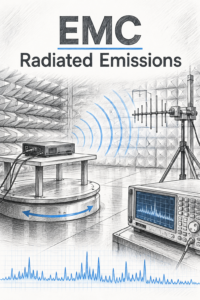
For radiated emissions, the relationship between EN 55032:2015+A1:2020 and ETSI EN 301 489-1 V2.2.3 (2019-11) is very similar to what you see with conducted emissions: there is no fundamental difference in limits or core measurement methods, but there are important differences in application, test conditions, and context.
EN 55032 is again the primary standard that defines radiated emissions requirements. It specifies the frequency ranges (typically 30 MHz up to 6 GHz or higher depending on the equipment), limits (Class A and Class B), measurement distances (3 m or 10 m), and test environments such as OATS or semi-anechoic chambers. It also includes detailed procedures for antenna selection, height scanning, polarization, and maximization techniques to ensure worst-case emissions are captured. The A1:2020 amendment refined aspects of measurements above 1 GHz, including clearer guidance on test setups and handling of modern high-frequency digital devices.
ETSI EN 301 489-1 does not create its own radiated emissions limits either. Instead, it relies on EN 55032 (or equivalent CISPR standards) for defining what acceptable emission levels are. This means that the actual numeric limits, detector types, and measurement techniques used during testing are effectively the same as those in EN 55032. From a purely technical measurement standpoint, a test lab will follow EN 55032 procedures even when demonstrating compliance with ETSI 301 489-1.
However, the key differences emerge in how the equipment is exercised during the test. ETSI 301 489-1 requires radio equipment to be tested in realistic operating conditions, including active transmission and reception modes. This is particularly important for radiated emissions because intentional transmitters can dominate the emission profile. While the standard excludes the intentional emissions at the fundamental frequency and necessary bandwidth (since those are covered by radio standards like EN 300 328), it still requires assessment of spurious emissions and broadband noise during operation. In contrast, EN 55032 assumes the equipment is an unintentional radiator and focuses on digital activity and I/O configurations rather than radio transmission states.
Another difference lies in the treatment of frequencies above 1 GHz. EN 55032 explicitly defines measurement requirements and limits in this region for multimedia equipment. Under ETSI 301 489-1, these same limits are used, but testing may need to consider additional radio-related configurations, such as different channels, modulation schemes, or antenna paths, which can influence the radiated emissions profile. This can make ETSI-based testing more complex in practice, even though the limits themselves are unchanged.
Finally, ETSI 301 489-1 places radiated emissions within a broader EMC compliance framework, where emissions are only one part of the assessment alongside immunity and performance criteria. EN 55032, by comparison, treats radiated emissions as a standalone compliance objective with a simple pass/fail against limits.
To summarise, for radiated emissions there is no direct difference in limits or measurement methodology between the two standards. The real gap lies in test configuration and context: EN 55032 defines how to measure and assess emissions for multimedia equipment, while ETSI 301 489-1 applies those same requirements to radio equipment, requiring testing under active radio operating conditions and integrating the results into a wider EMC and RED compliance framework.
3. Immunity
3.1 Radiated Immunity
When you look at radiated immunity, the comparison changes significantly because EN 55035:2017+A11:2020 and ETSI EN 301 489-1 V2.2.3 (2019-11) are both immunity standards, so here you are no longer dealing with a “reference vs framework” situation like emissions. Instead, both standards define radiated RF immunity requirements, but they do so with different scopes, performance expectations, and application contexts.
EN 55035 is the immunity standard for multimedia equipment, and it directly specifies radiated immunity requirements based on the EN 61000-4-3 test method. It defines the frequency range (typically 80 MHz to 6 GHz), test levels (commonly 3 V/m or higher depending on environment), modulation (usually 80% AM at 1 kHz), and test setups such as uniform field areas in anechoic chambers. It also clearly defines performance criteria (A, B, C) depending on the function being assessed, with an emphasis on maintaining acceptable operation of multimedia functions like audio/video playback, data processing, and display performance. The standard is relatively self-contained and tailored to typical consumer and professional multimedia use cases.
ETSI EN 301 489-1 also specifies radiated immunity requirements, again using EN 61000-4-3 as the underlying test method, but it applies these in the context of radio equipment operating under the RED Directive. While the test method itself is essentially the same, ETSI introduces important differences in how the test is applied. In particular, equipment must be tested in active radio operating modes, including transmitting and receiving states, which can make the behaviour under RF exposure more complex. The presence of intentional RF signals means the equipment may experience self-interference or desensitization, which is not a consideration in EN 55035.
Another key difference is in the selection of test levels and severity. ETSI standards often require higher test levels or more stringent conditions, especially when combined with product-specific parts (such as EN 301 489-17 for broadband radios). These may include higher field strengths (e.g., 10 V/m or more), extended frequency ranges, or additional requirements to ensure that radio communication is not disrupted. EN 55035 generally applies baseline immunity levels suitable for typical electromagnetic environments, whereas ETSI aims to ensure reliable operation in the presence of strong RF fields that could affect radio performance.
Performance criteria also differ in practice. While both standards use the same A/B/C classification, ETSI EN 301 489-1 places stronger emphasis on the continuity of radio functions, such as maintaining a communication link or recovering it quickly after disturbance. Temporary degradation that might be acceptable under EN 55035 (for example, a brief visual artifact or audio glitch) may be more tightly controlled in ETSI if it affects the essential radio functionality. This makes ETSI assessments more functionally demanding, even when the formal criteria definitions appear similar.
Finally, EN 55035 is designed as a standalone immunity standard, whereas ETSI EN 301 489-1 is part of a modular system that must be used alongside product-specific standards. These product-specific parts can further refine radiated immunity requirements, including specific operating modes, pass/fail conditions, and test configurations, adding another layer of complexity not present in EN 55035.
So, while both standards rely on the same fundamental radiated immunity test method (EN 61000-4-3), the gap lies in application and rigor. EN 55035 provides a general-purpose immunity framework for multimedia equipment, with defined test levels and acceptable functional degradation. ETSI EN 301 489-1, on the other hand, applies radiated immunity in a radio-specific context, often with higher severity, stricter functional expectations, and mandatory testing in active communication modes.
3.2 Electrostatic Discharge (ESD)
For electrostatic discharge (ESD) immunity, the comparison between EN 55035:2017+A11:2020 and ETSI EN 301 489-1 V2.2.3 (2019-11) again shows that both standards are built on the same fundamental test method, but differ in application, test philosophy, and functional expectations.
EN 55035 defines ESD immunity requirements for multimedia equipment by directly referencing EN 61000-4-2, which specifies the test setup, discharge network, and procedures. It applies standard test levels such as ±4 kV contact discharge and ±8 kV air discharge, representing a typical residential or commercial electromagnetic environment. The standard also clearly identifies where discharges should be applied—user-accessible surfaces, connectors, and control interfaces—and requires testing under representative operating conditions. Performance is assessed using the familiar criteria A, B, and C, allowing temporary degradation (such as momentary display disturbance or audio interruption) provided the equipment recovers without user intervention, depending on the function.
ETSI EN 301 489-1 also uses EN 61000-4-2 as the basis for ESD testing, so the test generator, waveform, and general methodology are effectively identical. However, ETSI applies these requirements in the context of radio equipment, which introduces several practical differences. One of the most important is that the equipment must be tested in active operating modes, including transmitting and receiving states. This means ESD events are evaluated not just for their effect on general functionality, but specifically for their impact on radio performance, such as maintaining a communication link or avoiding unintended transmissions.
In terms of test severity, ETSI 301 489-1 typically uses similar baseline levels to EN 55035, but product-specific standards (for example, those covering wireless technologies) may require additional discharge points, stricter application strategies, or more demanding acceptance criteria. The presence of antennas, RF ports, and exposed conductive parts unique to radio equipment can also expand the range of test points compared to typical multimedia devices.
A key difference lies in the interpretation of performance criteria. While both standards use the same A/B/C definitions, ETSI places greater emphasis on the continuity and integrity of radio functions. For example, a temporary disturbance that is acceptable under EN 55035—such as a brief glitch in a display—might still pass, but if an ESD event causes a radio link to drop or requires reconnection, this may be judged more critically under ETSI requirements. In some cases, recovery behaviour and reconnection time become important aspects of compliance, especially for essential radio services.
Finally, the context of use distinguishes the two standards. EN 55035 is a standalone immunity standard aimed at ensuring multimedia equipment can tolerate everyday electrostatic events without unacceptable user impact. ETSI EN 301 489-1, on the other hand, integrates ESD into a broader EMC framework for RED compliance, where immunity must be demonstrated alongside emissions and with consideration of overall radio system performance. It is also typically used in conjunction with product-specific ETSI standards, which can further refine ESD requirements.
There is no fundamental difference in the ESD test method or basic voltage levels, since both standards rely on EN 61000-4-2. The real gap lies in how the test is applied and assessed: EN 55035 focuses on general multimedia functionality under ESD stress, while ETSI EN 301 489-1 applies the same test in a radio-operational context, with greater emphasis on maintaining communication performance and system-level behaviour.
3.3 Fast Transient Burts (EFTB)
For fast transient bursts (EFT/B), the situation is very similar to what we saw with ESD: the fundamental test method is the same in both EN 55035:2017+A11:2020 and ETSI EN 301 489-1 V2.2.3 (2019-11), but the application context, operating modes, and functional assessment create the main differences.
EN 55035 addresses fast transient bursts for multimedia equipment by referencing EN 61000-4-4, which defines the generator, pulse characteristics, coupling methods, and typical test levels. The standard specifies testing on AC mains ports, DC supply ports, and I/O lines where bursts might realistically occur, such as through switching transients from nearby equipment. Typical test voltages for multimedia devices are ±1 kV on I/O lines and ±2 kV on power lines, with repetitive bursts applied at specified intervals. Performance is evaluated using criteria A, B, or C, where temporary degradation may be allowed provided the system returns to normal operation without permanent damage. EN 55035 focuses on ensuring the device continues to function normally under realistic industrial or residential electrical disturbances, particularly on digital and multimedia interfaces.
ETSI EN 301 489-1 also uses EN 61000-4-4 as the basis for fast transient burst testing, so the technical test setup and pulse parameters are identical. The difference is in how the standard is applied to radio equipment. ETSI requires testing during active radio operation, including transmitting and receiving states, because EFT disturbances can affect not just peripheral electronics but also radio performance and link integrity. Consequently, burst testing may be applied to additional points such as antenna ports or RF-related circuitry, depending on the product-specific ETSI parts.
The severity and performance expectations can also differ. While the basic voltage levels may be similar, ETSI often imposes additional functional requirements to ensure that temporary disturbances do not compromise critical radio operations. A multimedia device might tolerate a brief glitch during an EFT burst, but in a radio device, even a short disruption that interrupts a communication link could be considered a failure, depending on the performance criteria applied.
Finally, the compliance framework differs. EN 55035 treats EFT immunity as a standalone evaluation for multimedia equipment functionality, whereas ETSI EN 301 489-1 integrates EFT testing into a broader EMC and RED compliance scheme, requiring verification of both equipment function and radio operation under electrical disturbances. Product-specific ETSI standards may further refine the test points, severity, and evaluation criteria beyond the generic EN 61000-4-4 guidance.
There is no fundamental difference in the EFT test method or pulse characteristics between EN 55035 and ETSI 301 489-1, since both follow EN 61000-4-4. The main gap is in application and functional assessment: EN 55035 focuses on general multimedia operation under EFT stress, while ETSI 301 489-1 applies the same methodology in a radio-operational context, emphasizing the continuity and integrity of radio communications during transient disturbances.
3.4 Surge Immunity
For surge (voltage spike) immunity, EN 55035 addresses multimedia equipment by referencing EN 61000-4-5, which defines the test generators, waveform parameters (1.2/50 µs for voltage, 8/20 µs for current), coupling methods, and test levels. Surges are applied mainly to AC mains ports, and sometimes DC or telecommunication lines, simulating events like lightning-induced transients or switching from utility lines. EN 55035 specifies test voltages typical for consumer and professional multimedia equipment (for example, ±1 kV to ±2 kV on signal lines and ±2 kV to ±4 kV on power lines). The evaluation criteria (A/B/C) determine whether temporary degradation or automatic recovery is acceptable, emphasizing continuous multimedia functionality.
ETSI EN 301 489-1 also relies on EN 61000-4-5 for surge testing, so the fundamental test waveform, duration, and coupling methods are identical. The distinction lies in application and assessment. Radio equipment must be tested in active operating states, including transmit and receive modes, because a surge can impact both the device electronics and the radio link. Some ETSI product-specific parts may specify higher test voltages or additional points, particularly for outdoor or antenna-connected equipment, to account for exposure to stronger surges in real-life radio deployments.
Another important difference is the functional focus. EN 55035 allows multimedia devices to experience brief disturbances without permanent damage, while ETSI emphasizes maintaining radio communication integrity. A surge that briefly interrupts a non-critical function may be acceptable in EN 55035, but in ETSI, if it affects the radio link or causes loss of transmitted data, it may be considered a failure.
Summary for surge:
- Test method and voltage levels → the same (EN 61000-4-5)
- Gap → ETSI applies the test in a radio-operational context, sometimes with stricter functional requirements or extended test points.
3.5 Voltage Dips, Short Interruptions, and Voltage Variations
For voltage dips and interruptions, EN 55035 references EN 61000-4-11, which defines the test levels (percentage of voltage reduction), duration (milliseconds to several cycles), and application method. These tests simulate utility voltage fluctuations such as brownouts or short interruptions. EN 55035 focuses on ensuring that multimedia equipment continues to operate normally or recovers gracefully without permanent damage. The criteria A/B/C are used to assess tolerable degradation, typically allowing temporary interruptions in non-critical functions, like video playback.
ETSI EN 301 489-1 also references EN 61000-4-11 for voltage dips and variations, but again the key differences are in context and functional assessment. Radio equipment is tested while actively transmitting and receiving, because voltage dips can directly affect communication performance. A dip that might only briefly freeze a multimedia display under EN 55035 could, in ETSI testing, disrupt a critical radio link. ETSI also often includes more stringent conditions for dips in product-specific standards, particularly for devices that must remain operational during network outages or in safety-critical wireless systems.
Additionally, ETSI 301 489-1 may require verification of automatic recovery of radio functions and timing of reconnection after a dip, whereas EN 55035 is generally concerned with resuming normal multimedia operation.
Summary for voltage dips:
- Test method → identical (EN 61000-4-11)
- Gap → ETSI applies tests in active radio conditions with stronger emphasis on functional continuity of radio services, not just multimedia operation.
3.6 Overall Immunity Gap Summary
| Immunity Type | EN 55035 | ETSI EN 301 489-1 | Key Gap |
| ESD | EN 61000-4-2, multimedia surfaces/ports | Same test, radio-active modes | Focus on radio performance, functional continuity |
| Fast Transients (EFT/B) | EN 61000-4-4, AC/DC/I/O ports | Same test, radio-active modes | Active radio operation, critical link maintenance |
| Surge | EN 61000-4-5, mains & signal lines | Same test, radio-active modes, possible higher severity | Radio-specific points and functional expectations |
| Voltage Dips & Interruptions | EN 61000-4-11, multimedia operation | Same test, radio-active modes | Continuity of radio communications, reconnection behaviour |
4. Gap Analysis Report: EN 55032/55035 vs ETSI EN 301 489-1
4.1 Overview
| Aspect | EN 55032 / EN 55035 | ETSI EN 301 489-1 | Gap Summary |
| Scope | Multimedia equipment | Radio equipment under RED | ETSI covers radio; EN 55032/35 is multimedia-focused |
| Coverage | Emissions (55032) & Immunity (55035) | Emissions + Immunity + Functional performance | ETSI integrates broader system-level EMC and RED compliance |
| Test approach | Standalone test standards | Framework standard + product-specific parts | ETSI requires combination with product-specific ETSI standards |
Emissions Comparison
4.2 Conducted Emissions
- EN 55032: Defines AC mains conducted emissions limits (150 kHz–30 MHz), measurement setups, Class A/B, LISN, test modes.
- ETSI 301 489-1: References EN 55032 for conducted emissions. Limits and methods are identical.
- Gap: ETSI applies the same test in radio-active operating modes, ensuring worst-case radio operation is considered.
4.3 Radiated Emissions
- EN 55032: Covers 30 MHz–6 GHz+, OATS/SAC/FAR measurements, Class A/B limits, worst-case multimedia modes.
- ETSI 301 489-1: Uses EN 55032 limits and methods. Testing occurs under radio transmit/receive conditions, assessing spurious emissions without duplicating fundamental radio frequency emissions.
- Gap: Application context—ETSIs tests in active radio states; test setup may require channel and antenna-specific configurations.
5. Immunity Comparison
5.1 ESD (Electrostatic Discharge)
- EN 55035: EN 61000-4-2; ±4 kV contact, ±8 kV air; user-accessible surfaces; multimedia functionality evaluation.
- ETSI 301 489-1: Same method; applied to active radio operation; functional assessment emphasizes radio link integrity.
- Gap: ETSI focuses on maintaining communication performance, stricter functional requirements than multimedia-only assessment.
5.2 Fast Transient Bursts (EFT/B)
- EN 55035: EN 61000-4-4; ±1–2 kV on AC/DC/I/O lines; multimedia functionality evaluation.
- ETSI 301 489-1: Same waveform; applied in active radio states; may include antenna or RF-related points.
- Gap: Radio operation critical; temporary disruptions that are acceptable for multimedia may be unacceptable for radio functions.
5.3 Surge
- EN 55035: EN 61000-4-5; ±1–4 kV on power and signal lines; multimedia function recovery.
- ETSI 301 489-1: Same test; applied in active radio modes; may require additional test points or higher severity for radio ports.
- Gap: Focus on continuity of radio functions, stricter functional performance than multimedia equipment.
5.4 Voltage Dips, Interruptions, and Variations
- EN 55035: EN 61000-4-11; tests dips/interrupts; multimedia device recovery; A/B/C criteria.
- ETSI 301 489-1: Same test; applied during radio operation; functional criteria emphasize communication continuity and reconnection timing.
- Gap: ETSI ensures essential radio operations remain uninterrupted; EN 55035 focuses on multimedia recovery.
5.5 Radiated Immunity
- EN 55035: EN 61000-4-3; 80 MHz–6 GHz; 3 V/m typical; multimedia functional performance; A/B/C criteria.
- ETSI 301 489-1: Same test; applied in active radio modes; often higher test levels in product-specific ETSI parts.
- Gap: ETSI places stronger emphasis on radio link continuity and functional performance in active RF environments.
6. Key Observations
- Test Methods: For both emissions and immunity, the core measurement techniques and test setups are the same (CISPR/EN 61000-4-x).
- Application Context: EN 55032/35 is multimedia-focused, ETSI 301 489-1 applies tests in radio-active conditions.
- Functional Assessment: ETSI imposes stricter system-level requirements, ensuring radio communication is maintained during disturbances, whereas EN 55035 emphasizes recovery of multimedia operation.
- Framework vs Standalone: EN 55032/35 are standalone standards; ETSI 301 489-1 is a framework standard, requiring product-specific ETSI parts for complete compliance.
- Severity & Test Points: ETSI may require additional points, higher severity, or extended frequency ranges for radio-specific equipment.
7. Practical Implications
- Testing only to EN 55032/35: Sufficient for multimedia compliance, but insufficient for RED/radio compliance.
- Testing to ETSI 301 489-1: Requires EN 55032/35 as reference for emissions, EN 61000-4-x for immunity, plus product-specific ETSI standards. Functional assessment emphasizes radio continuity, not just emission limits or multimedia recovery.
8. Matrix Table
| EMC Parameter | Test Standard / Method | EN 55032 / 55035 Scope | ETSI EN 301 489-1 Scope | Key Gap / Difference |
| Conducted Emissions | EN 55032, CISPR 32 | AC mains, 150 kHz–30 MHz, Class A/B, LISN | Same limits, tested on radio equipment during active TX/RX modes | Application context: ETSI requires radio-active testing; otherwise limits identical |
| Radiated Emissions | EN 55032, CISPR 32 | 30 MHz–6 GHz+, OATS/SAC/FAR, multimedia worst-case modes | Same limits, applied with active radio operation, channel/antenna-specific | ETSI requires active radio operating modes; spurious emissions evaluated; fundamental RF excluded |
| Radiated Immunity | EN 61000-4-3 | 80 MHz–6 GHz, 3 V/m typical, multimedia function evaluation, A/B/C criteria | Same method, applied during active TX/RX; higher field strength possible in product-specific ETSI parts | Focus on maintaining radio link continuity; stricter functional assessment |
| ESD (Electrostatic Discharge) | EN 61000-4-2 | ±4 kV contact, ±8 kV air; user-accessible surfaces; multimedia functionality | Same waveform, tested during radio operation | Functional gap: ETSI emphasizes radio link integrity and continuity |
| Fast Transient Bursts (EFT/B) | EN 61000-4-4 | ±1–2 kV AC/DC/I/O lines; multimedia function recovery | Same waveform, applied during active radio operation; may include RF points | Functional gap: radio operational continuity; temporary disturbances stricter than multimedia |
| Surge (Voltage Spike) | EN 61000-4-5 | ±1–4 kV on mains and signal lines; multimedia recovery | Same waveform; applied in active radio mode; may require higher voltage or additional test points | ETSI emphasizes continuity of radio functions and may have stricter test points/severity |
| Voltage Dips / Interruptions / Variations | EN 61000-4-11 | Dips and short interruptions; multimedia recovery; A/B/C criteria | Same test, applied during active radio operation; reconnection and link continuity verified | ETSI functional gap ensures essential radio operation; stricter assessment than multimedia equipment |