In Electromagnetic Compatibility (EMC), disturbance refers to any unwanted electromagnetic energy that interferes with the normal operation of electronic equipment. The principle of EMC is to ensure that electronic devices can function correctly in their intended environment without causing or suffering from electromagnetic interference (EMI). This means that devices must be designed to limit the electromagnetic disturbances they emit and also be resistant to disturbances coming from external sources.
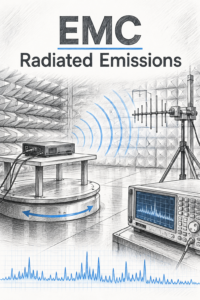
One key principle of EMC is emission control. Electronic devices naturally produce electromagnetic signals during operation, especially high-speed digital circuits, motors, and switching power supplies. If these emissions are not controlled, they can interfere with nearby equipment. Engineers reduce emissions through shielding, filtering, proper grounding, and careful circuit layout. By limiting the amount of electromagnetic energy released, devices are less likely to cause interference with other systems.
Another important principle is immunity (or susceptibility control). This refers to the ability of a device to operate correctly when exposed to electromagnetic disturbances from its environment. Devices with good immunity can withstand noise from sources such as radio transmitters, mobile phones, power lines, and lightning. Techniques such as shielding, surge protection, filtering, and robust circuit design help improve a system’s resistance to interference.
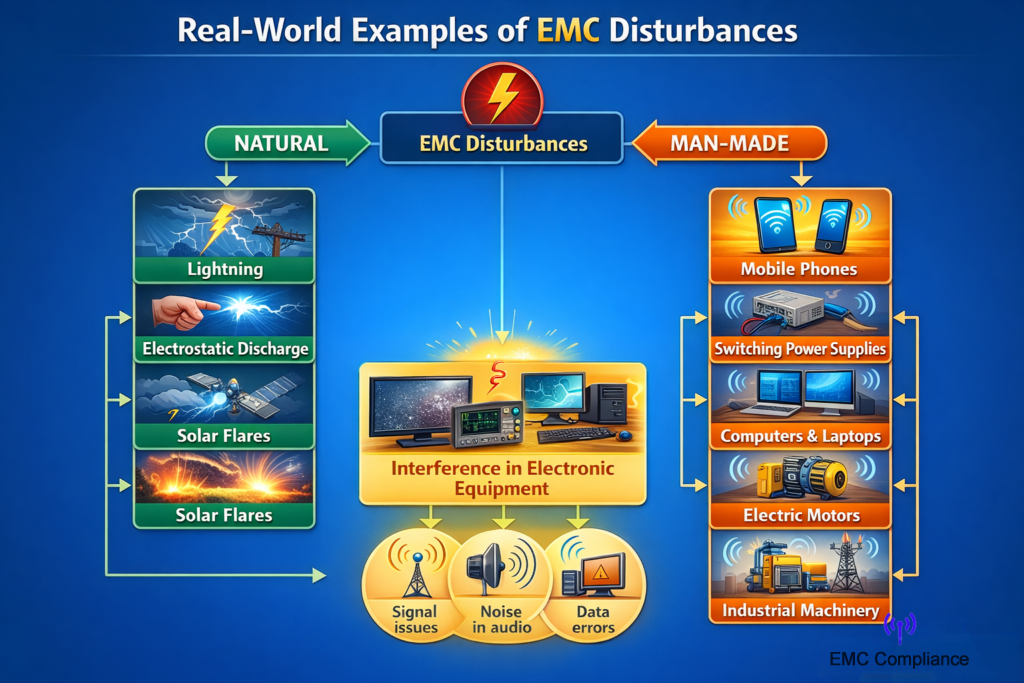
Disturbance sources in EMC are generally divided into natural and man-made sources. Natural sources include lightning, electrostatic discharge (ESD), and solar radiation, which can generate strong electromagnetic fields capable of disrupting electronic systems. Lightning strikes, for example, can induce large voltage surges in power and communication lines, potentially damaging sensitive electronic components.
Man-made sources of electromagnetic disturbance are more common and include electric motors, switching power supplies, fluorescent lighting, radio transmitters, mobile phones, computers, and industrial machinery. These devices generate electromagnetic noise due to rapid switching of currents and voltages. In industrial and domestic environments, multiple electronic systems operating close together increase the risk of interference, making EMC design and testing essential.
Overall, understanding the principles and sources of EMC disturbances allows engineers to design reliable electronic systems that operate safely and efficiently. By controlling emissions and improving immunity, modern electronic equipment can coexist without causing harmful interference, ensuring performance, safety, and regulatory compliance.