The Batteries Regulation (EU) 2023/1542 is a comprehensive legal framework adopted by the European Union to regulate batteries and waste batteries throughout their entire lifecycle, replacing the earlier Batteries Directive (2006/66/EC) and aligning with the EU’s sustainability and circular economy goals under the European Green Deal. It establishes detailed requirements that manufacturers, importers, and distributors must meet in order to place batteries on the EU market or put them into service.
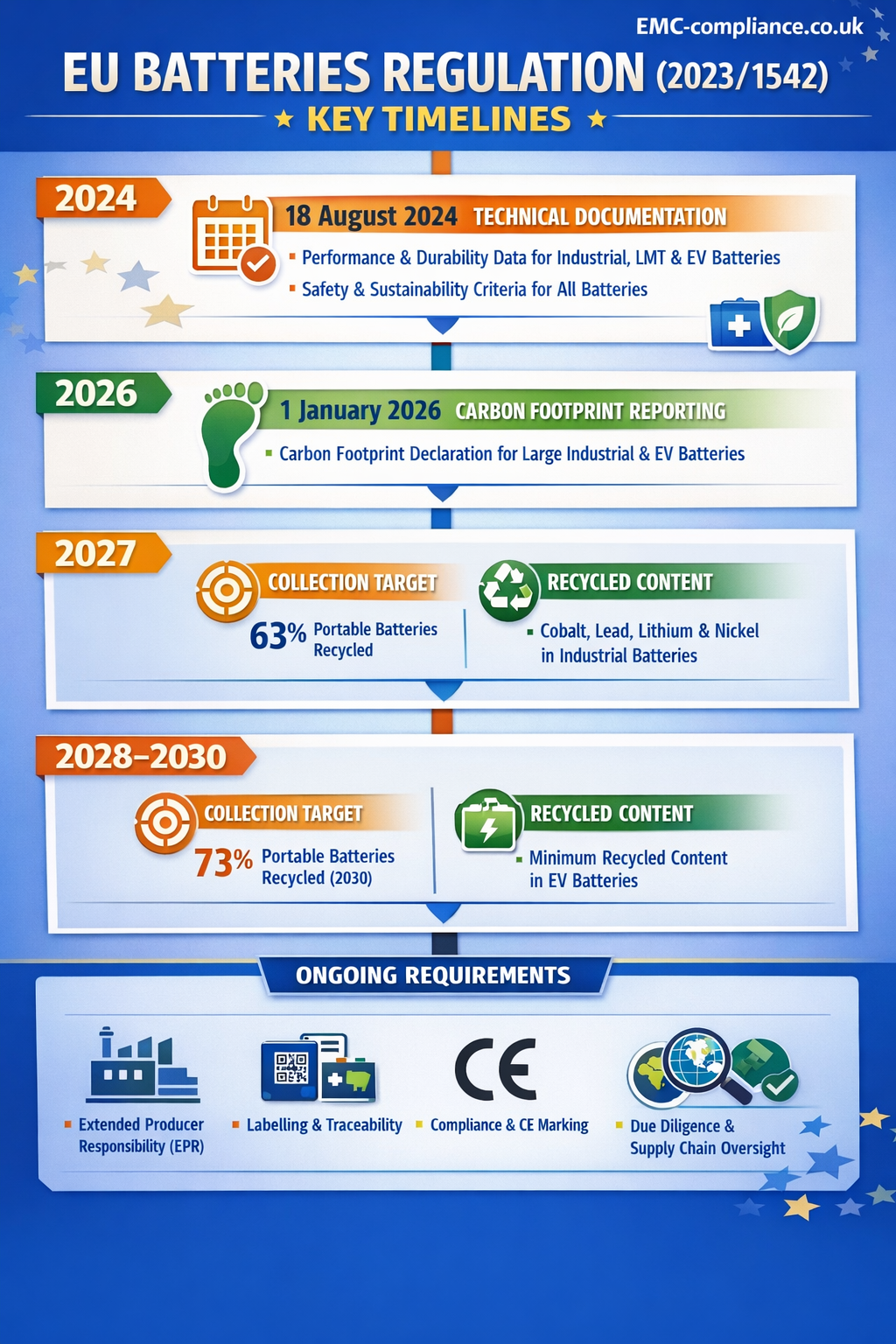
At its core, the regulation sets sustainability, safety, and information standards. Batteries must meet stringent substance restrictions — for instance, mercury must not exceed 0.0005%, cadmium in portable batteries must be below 0.002%, and lead in portable batteries must stay under 0.01% by weight — reflecting a strong push to minimise hazardous materials. In addition, from August 18, 2024, many types of batteries (such as rechargeable industrial, light means of transport and electric vehicle batteries) must be accompanied by technical documentation on performance and durability, and all batteries must satisfy safety and sustainability criteria before being placed on the market.
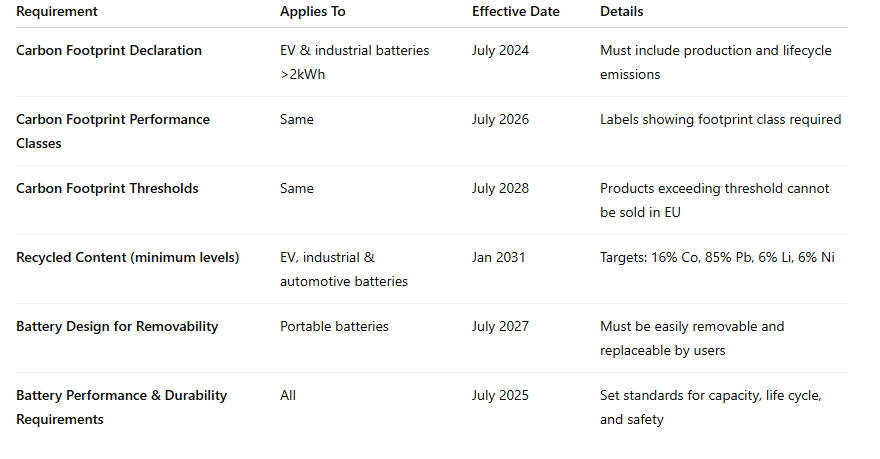
A significant new requirement under the regulation is the carbon footprint declaration and labelling. Manufacturers must calculate and declare the carbon footprint of each battery model per manufacturing plant, using a life cycle assessment methodology defined by the European Commission. These declarations must be included in the battery’s technical documentation and will form the basis for future performance class thresholds and limits aimed at reducing the environmental impact of batteries over time.
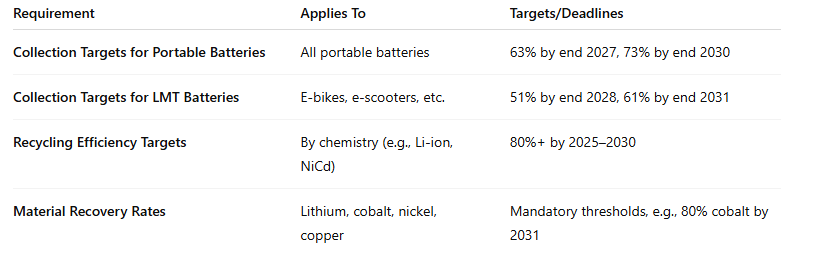
The regulation also introduces extended producer responsibility (EPR), collection and recovery targets, and recycled content obligations. Producers are obliged to finance collection and recycling systems, meet defined collection rate targets (e.g., 63% for portable batteries by 2027 and 73% by 2030), and contribute to the circular economy by incorporating minimum recycled content levels for critical materials — such as cobalt, lead, lithium and nickel — in larger industrial and EV batteries by specified future dates.
Overview of Regulation (EU) 2023/1542
Adopted: 28 June 2023
Applies to: All types of batteries placed on the EU market, including:
1)Portable batteries
2)Automotive batteries
3)Electric vehicle (EV) batteries
4)Industrial batteries
5)Batteries for light means of transport (e.g. e-bikes, e-scooters)
Key Objectives
- Promote sustainability and reduce environmental impact.
- Improve efficiency and safety across the battery value chain.
- Establish mandatory due diligence and end-of-life management.
- Enhance performance, durability, and recycling standards.
A. Key Requirements by category
B. Waste Management and Collection
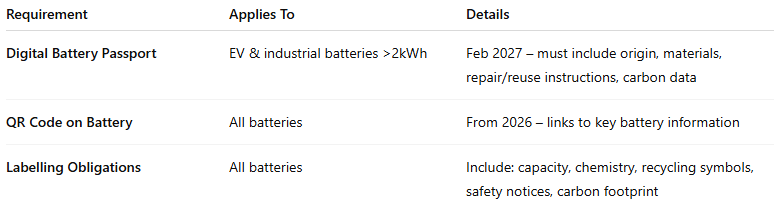
C. Information, Labeling and Traceability
D. Due Diligence and Supply Chain Transparency

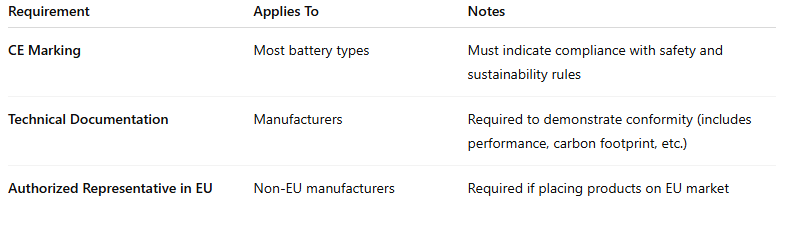
E. Conformity and Market Surveillance
Who’s Affected?
-
- Battery manufacturers and importers
- Vehicle manufacturers
- Electronics producers
- Recyclers and waste handlers
- Distributors and retailers placing batteries on the EU market
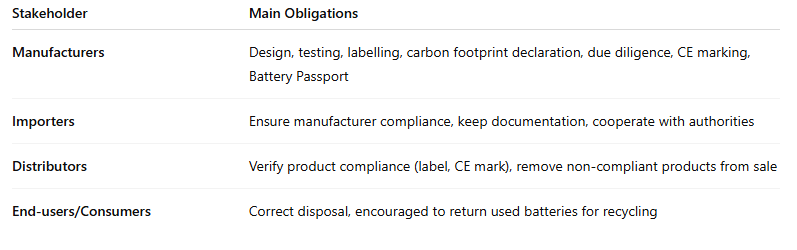
Obligations by Stakeholder
Sustainability and Circular Economy Impact
This regulation aligns with the EU Green Deal, Circular Economy Action Plan, and Zero Pollution Action Plan, making batteries a central focus of sustainable industrial policy.
Home – Latest Standards – FCC vs CISPR – Fast Transient Bursts – GDPR