The IEC/EN 61000-4-4 EMC standard is about immunity testing (measurement techniques) against repetitive electrical fast transients (EFT), also called bursts. This standard is part of the Basic EMC Publications.
IEC 61000-4-4 defines immunity requirements, test setups, test procedures, test equipment (and their calibration and verification) and ranges of test levels related to repetitive electrical fast transients (EFTs, bursts). In reality, bursts originate from switching transients: interruption of inductive loads, relay contact bounce, etc.
The object of IEC 61000-4-4 is to establish a common and reproducible reference in order to evaluate the immunity when subjected to bursts on the following ports:
- Supply ports
- IO (signal, control) ports (if cable length >3m)
- Earth ports
Test Setup.
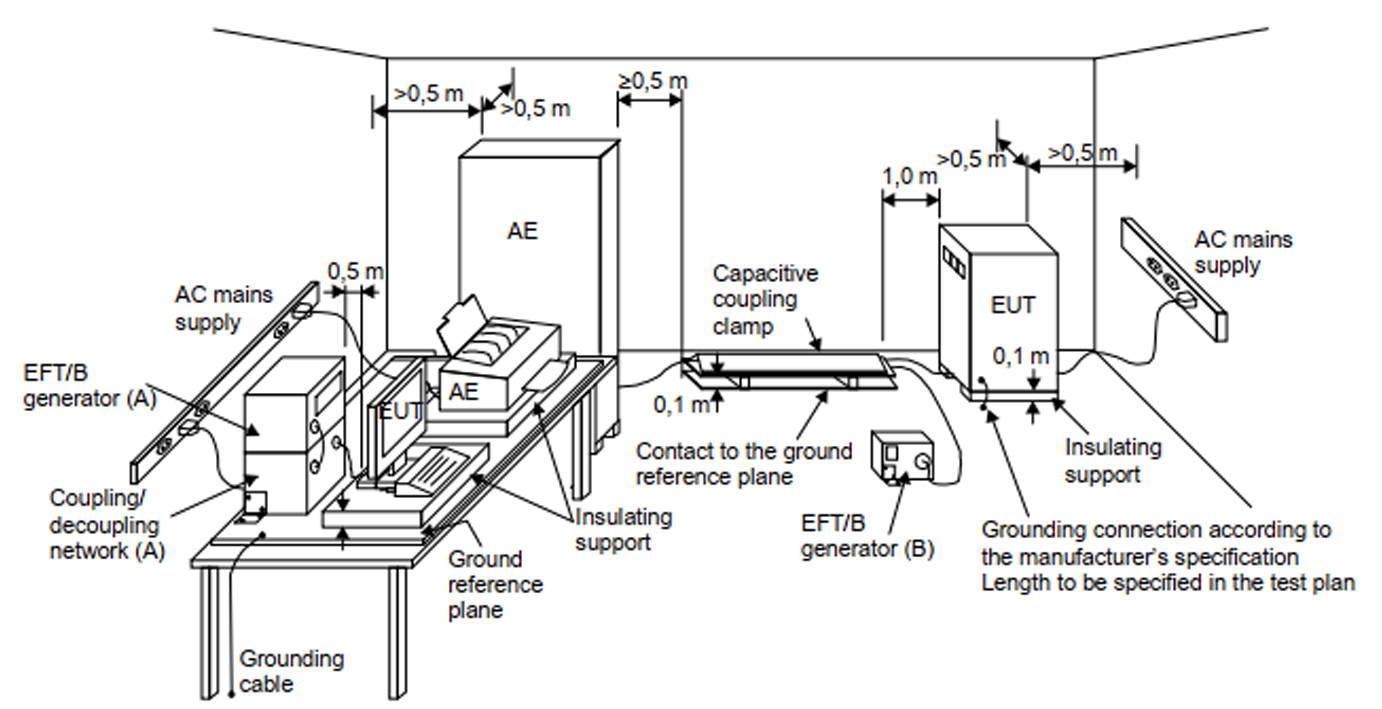
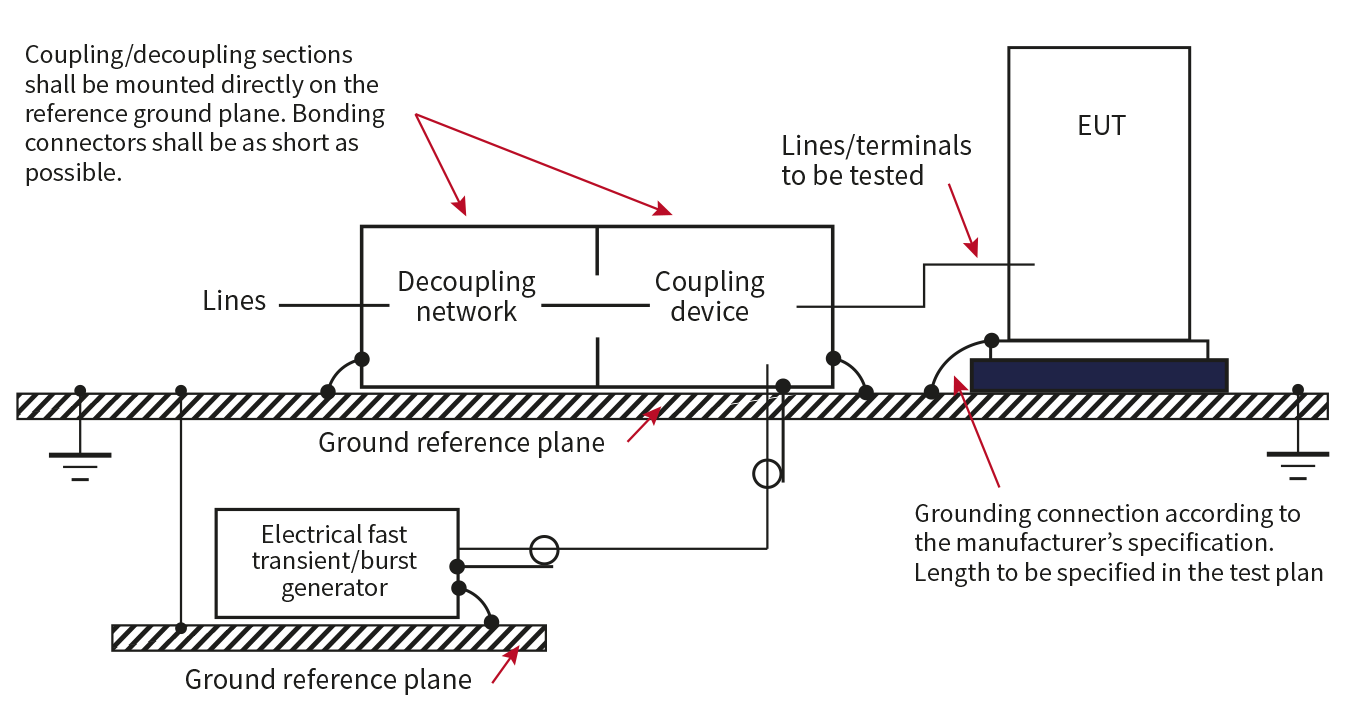
Floor standing EUTs and equipment designed to be mounted in other configurations, unless otherwise mentioned, shall be placed on a ground reference plane and shall be insulated from it by an insulating support with a thickness of 0.1m ±0.05m including non-conductive castors. Table-top equipment and equipment normally mounted on ceilings or walls as well as built-in equipment shall be tested with the EUT located 0.1m ±0.01m above the ground reference plane. The following picture shows locations for supply line coupling (A) and location for signal lines coupling (B).
Test Levels.
The use of 5kHz repetition frequency is traditional, however, 100kHz is closer to reality. Product committees should determine which frequencies are relevant for specific products or product types. With some products, there may be no clear distinction between power ports and signal ports, in which case it is up to product committees to make this determination for test purposes.
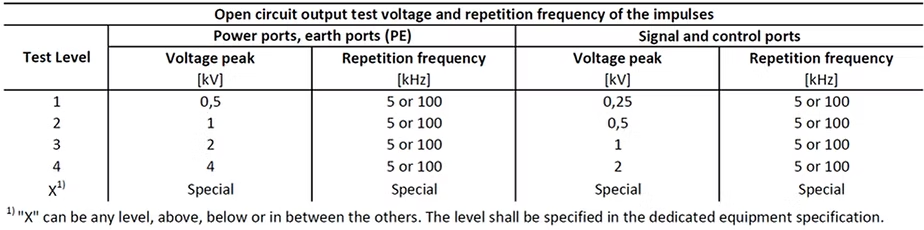
The use of 5kHz repetition frequency is traditional, however, 100 kHz is closer to reality. Product committees should determine which frequencies are relevant for specific products or product types. With some products, there may be no clear distinction between power ports and signal ports, in which case it is up to product committees to make this determination for test purposes.
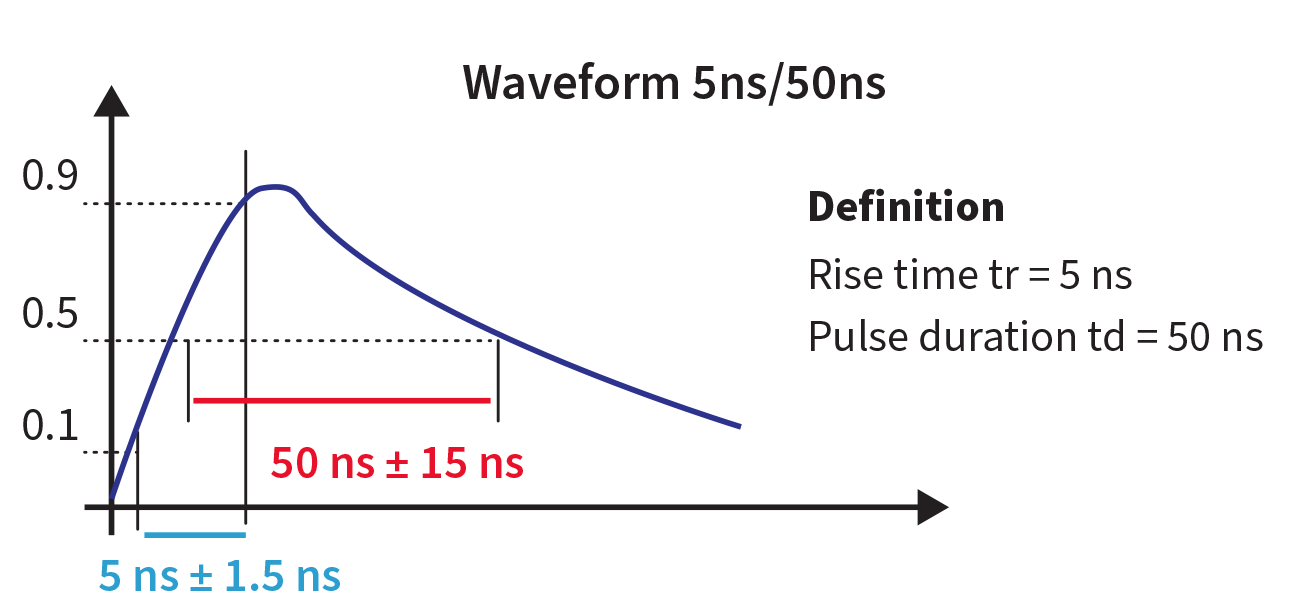
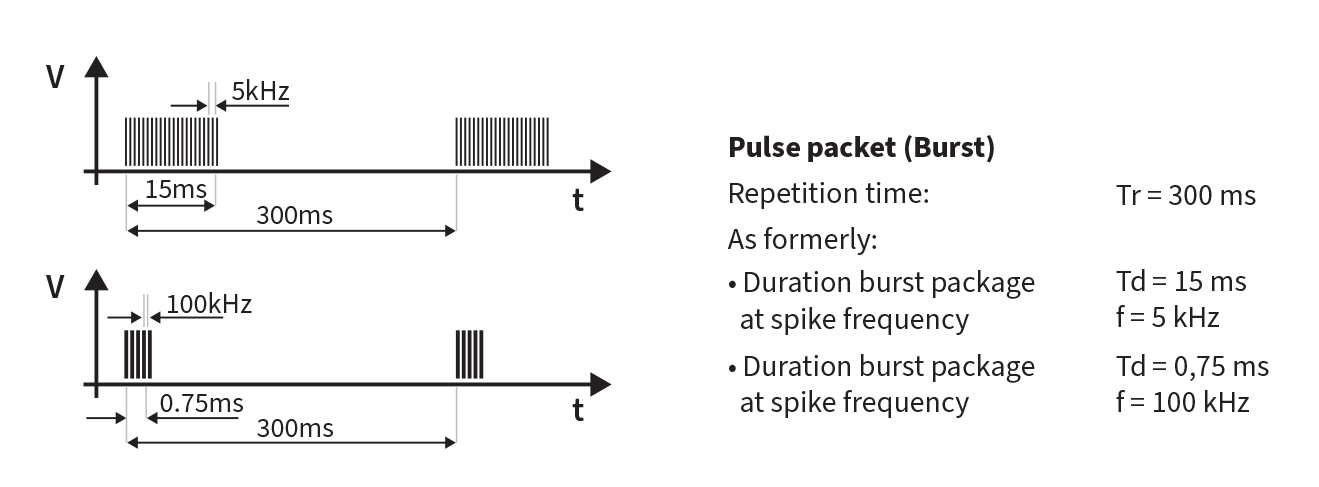
Here are the respective electromagnetic environmental classes for the test levels above:
- Level 1 – Well-protected environment. A computer room may represent this environment.
- Level 2 – Protected environment. The control room or terminal room of industrial and electrical plants may represent this environment.
- Level 3 – Typical industrial environment. The area of industrial process equipment may represent this environment.
- Level 4 – Severe industrial environment. The outdoor area of industrial process equipment where no specific installation practice has been adopted, power plants, the relay rooms of open-air high voltage substations and gas-insulated
substations of up to 500kV operating voltage (with typical installation practice) may represent this environment. - Level X – Special situations to be analyzed. The minor or major electromagnetic separation of disturbance sources from equipment circuits, cables, lines etc., and the quality of the installations may require the use of a higher or lower environmental level than those described above. It should be noted that equipment lines of a higher environmental level can penetrate a lower severity environment.