| Mark | Description |
|---|---|
 |
The CE-marking is the manufacturer’s statement to the EU authorities that his product complies with all relevant CE-marking Directives. It is important to emphasise that the CE-marking is not a quality mark or a guarantee to consumers in EU. The manufacturer is always responsible – within or outside EU – for CE-marking. If the manufacturer is not located in EU, he can authorise a representative located in EU who thus becomes responsible for CE-marking. The representative’s duties and responsibilities must be agreed in writing. Importers not authorised by the manufacturer must keep his documentation in safekeeping in EU for ten years after the last production date. Please bear in mind, that the importer may always be held responsible for the documentation. |
 |
VDE Mark for appliances as technical equipment according to the Appliance Safety Law (GSG), for Medical Device Law (MPG), components and installation materials.The VDE Mark indicates conformity with the VDE standards or European or internationally harmonized standards resp. and confirms compliance with protective requirements of the applicable EC Directive(s). The VDE Mark is a symbol for electrical, mechanical, thermal, toxic, radiological and other hazards. |
 |
Recognized Component Mark for Canada and the United States This new UL Recognized Component Mark,which became effective April 1, 1998, may be used on components certified by UL to both Canadian and U.S. requirements. Although UL had not originally planned to introduce a combined Recognized Component Mark, the popularity of the Canada/U.S. Listing and Classification Marks among clients with UL certifications for both Canada and the United States has led to the new Mark. |
 |
UL Listing Mark This is one of the most common UL Marks. If a product carries this Mark, it means UL found that samples of this product met UL’s safety requirements. These requirements are primarily based on UL’s own published Standards for Safety. This type of Mark is seen commonly on appliances and computer equipment, furnaces and heaters, fuses, electrical panelboards, smoke and carbon monoxide detectors, fire extinguishers and sprinkler systems, personal flotation devices like life jackets and life preservers, bullet resistant glass, and thousands of other products. |
 |
C-UL Listing Mark This mark is applied to products for the Canadian market. The products with this type of mark have been evaluated to Canadian safety requirements, which may be somewhat different from U.S. safety requirements. You will see this type of Mark on appliances and computer equipment, vending machines, household burglar alarm systems, lighting fixtures, and many other types of products. |
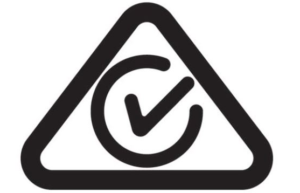 |
The Regulatory Compliance Mark (RCM) (General) The Regulatory Compliance Mark (RCM) is a trade mark owned by the electrical regulator (Regulatory Authorities (RAs)) and Australian Communications Media Authority (ACMA).The Australian Standard AS/NZS 4417.1 and AS/NZS 4417.2 Marking of electrical products to indicate compliance with regulations – General rules for use of the mark provides general requirements for the use of the RCM including location of the marking on the equipment and its dimensional requirements. |
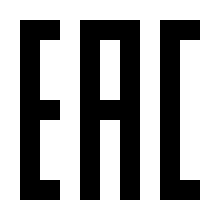 |
Eurasian Conformity mark The Eurasian Conformity mark (EAC mark) is a certification symbol that shows a product complies with the technical regulations of the Eurasian Economic Union (EAEU). It is required for many products that are placed on the market within the EAEU.The mark applies to the member states of the union: Russia, Belarus, Kazakhstan, Armenia, and Kyrgyzstan. Products covered by EAEU technical regulations must undergo conformity assessment procedures—such as testing or certification—before they can legally be sold in these countries.The EAC mark serves a similar function to the CE marking in the European Union. It indicates that the manufacturer has ensured the product meets applicable safety, health, and technical standards. Without the EAC mark (where required), products may be denied customs clearance or prohibited from being distributed within the EAEU market. |